
How to Turn Fragmented Notes Into a Searchable Life Record
Most people do not fail to capture enough.
They fail to turn what they capture into something they can actually use later.
A note goes into Apple Notes. A photo stays in the camera roll. A voice memo lives in another app. A reminder is sent to yourself in chat. A task ends up in a to-do list with no context. A late-night reflection gets written once and never revisited.
Individually, these fragments all make sense.
Together, they rarely become a searchable life record.
That is the real problem behind fragmented notes. It is not only about mess. It is about retrieval, context, and meaning. If your records stay scattered, they never become a practical personal knowledge management system. They stay raw material.
Quick Take
Fragmented capture is normal. The real problem is that most tools help you save pieces without helping you rebuild context. A searchable life record turns those fragments into something you can revisit, search, and learn from over time.
Why fragmented notes rarely become usable later
Real life does not arrive in neat categories.
It arrives as fragments:
- a quick thought while walking
- a photo you do not want to forget
- a voice note captured before the idea disappears
- a task that only makes sense in the context of that day
- a short reflection that matters emotionally, but is hard to find later
This is normal. Fragmented capture is not a flaw. It is how people naturally record their lives.
The problem comes later. Most tools are built to store fragments, not connect them. They let you collect notes, but they do not help you rebuild the period of life those notes came from.
So when you look back, you do not find a clear memory. You find disconnected artifacts.
You preserved the pieces, but lost the shape of the experience.
What a searchable life record actually is
A searchable life record is more than a collection of notes.
It is a system where your daily fragments can be found, understood, and connected across time.
A good searchable life record helps you answer questions like:
- What was happening in my life that month?
- When did this project start becoming stressful?
- Which people or places kept showing up?
- What ideas did I keep returning to?
- What did I think mattered, and what actually filled my days?
That is different from ordinary note storage.
A note archive stores information. A searchable life record restores context.
It should let you search your life as lived, not just your files as stored.
| Area | Fragmented notes | Searchable life record |
|---|---|---|
| Capture | Text, photos, voice, reminders, and thoughts end up in separate apps | All fragments can enter one memory flow without demanding perfect structure |
| Retrieval | You have to remember where something was stored | You search by meaning, people, time, place, and recurring themes |
| Context | Each note stands alone | Entries gain meaning from what happened around them |
| Reflection | You revisit isolated artifacts | You revisit periods, patterns, and connections over time |
| Best for | Short-term capture | Long-term memory and practical personal knowledge management |
Why most personal knowledge management systems fail for real life
Many personal knowledge management systems work well for research, writing, or structured reference notes.
But real life is less orderly than a research workflow.
That is why many PKM systems break down when they are used for everyday personal capture.
- you have to organize too much during capture
- tags multiply and stop helping
- folders require decisions you do not want to make in the moment
- retrieval depends on remembering how you categorized something months ago
- the system works for knowledge, but not for life
A personal knowledge management system should not demand librarian behavior in the middle of ordinary experience.
If the system only works when you are calm, focused, and highly intentional, it will fail at the exact moment you most need to capture something.
That is why the strongest system for personal memory often starts with the timeline, not the folder tree.
Chronology is one of the most natural forms of meaning in human life. We do not just want to know what something was. We want to know when it happened, what came before it, and what else was happening around it.
A 4-step model for turning fragments into a usable timeline
If you want fragmented notes to become useful, the answer is not necessarily more discipline.
It is a better flow.
1. Capture in fragments
The first step is accepting reality: you are going to capture in fragments anyway.
Text, photos, voice notes, screenshots, quick observations, unfinished tasks, passing feelings, and short reflections all belong in the same intake layer.
You do not need to force coherence at the beginning.
You need to preserve what matters before it disappears.
2. Normalize the raw material
Fragments become more useful when they are converted into searchable input.
- turning voice into text
- extracting text from images
- attaching timestamps and location
- keeping the original media while making it searchable
A raw fragment is better than nothing. But a normalized fragment is much easier to revisit, group, and connect.
This is where capture starts turning into memory infrastructure. For a practical example, the audio journal app tutorial shows how a voice note can move from raw capture to searchable timeline input.
3. Structure records into timeline units
This is the step where your system stops being a note pile and starts becoming a usable personal knowledge management app for real life.
Instead of treating everything as one undifferentiated stream, the system should help organize records into meaningful units such as:
- events
- people
- places
- tasks
- ideas
- moods
- metrics
- highlights
Not because life is naturally tidy, but because structure makes reflection possible.
A note like “talk to Maya about moving” becomes far more useful when it sits near the photos, decisions, tasks, and emotions from that same period. Now it is not just an isolated note. It is part of a chapter.
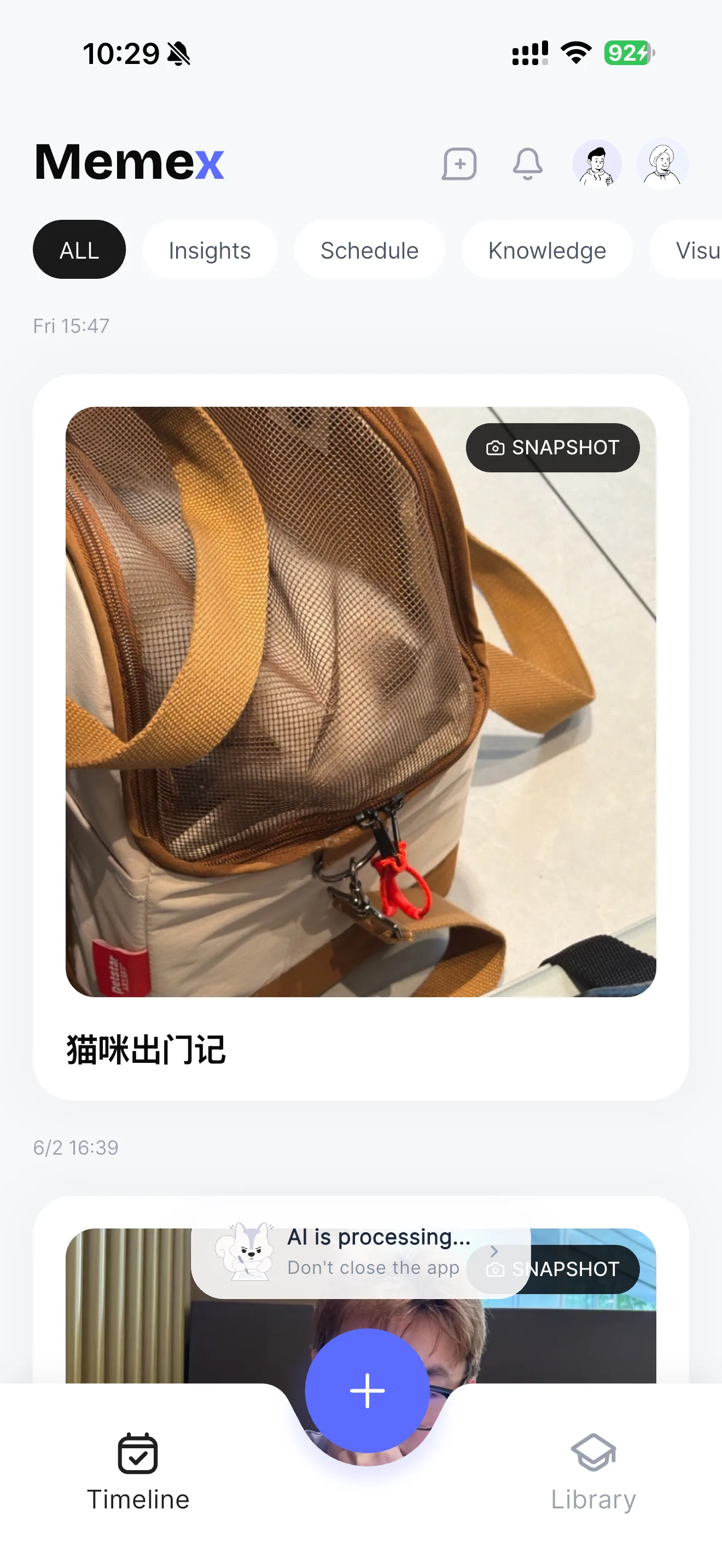
4. Revisit patterns, not just entries
A searchable life record becomes truly useful when it helps you see patterns.
- recurring stress around certain work
- repeated mentions of the same person
- places that shape your energy or mood
- ideas that keep resurfacing
- mismatches between what you planned and what actually happened
This is where a timeline becomes more than a log.
It becomes a system for understanding your life over time.
How a searchable life record becomes a practical PKM system
For personal use, a strong PKM system is not just a library of ideas.
It is a bridge between daily life and long-term understanding.
That bridge matters because many people do not struggle with capturing knowledge. They struggle with turning lived experience into something structured enough to search and reflect on later.
A practical personal knowledge management system for real life should do three things well:
- accept messy input
- preserve chronological context
- support pattern discovery later
That is what makes it usable.
Without those traits, a PKM system often becomes a place where interesting things go to disappear.
What this can look like inside Memex
This is the problem Memex is built around.
Memex is designed for people who already capture life in fragments: short notes, photos, voice, quick observations, tasks, unfinished thoughts. Instead of forcing everything into manual structure from the start, it helps organize those fragments into timeline cards and connected memory units.
That means your records can gradually become:
- a usable timeline
- a searchable life record
- a personal knowledge management system grounded in real life, not just abstract notes
The value is not only in capture. It is in what becomes possible later:
- searching your past
- revisiting periods of life
- seeing recurring people, places, and concerns
- understanding how scattered fragments connect into actual patterns
Memex also takes a local-first approach, which matters for any personal memory system. Your records are sensitive. If you are building a system that reflects your habits, relationships, routines, and thoughts, trust and portability matter just as much as convenience.
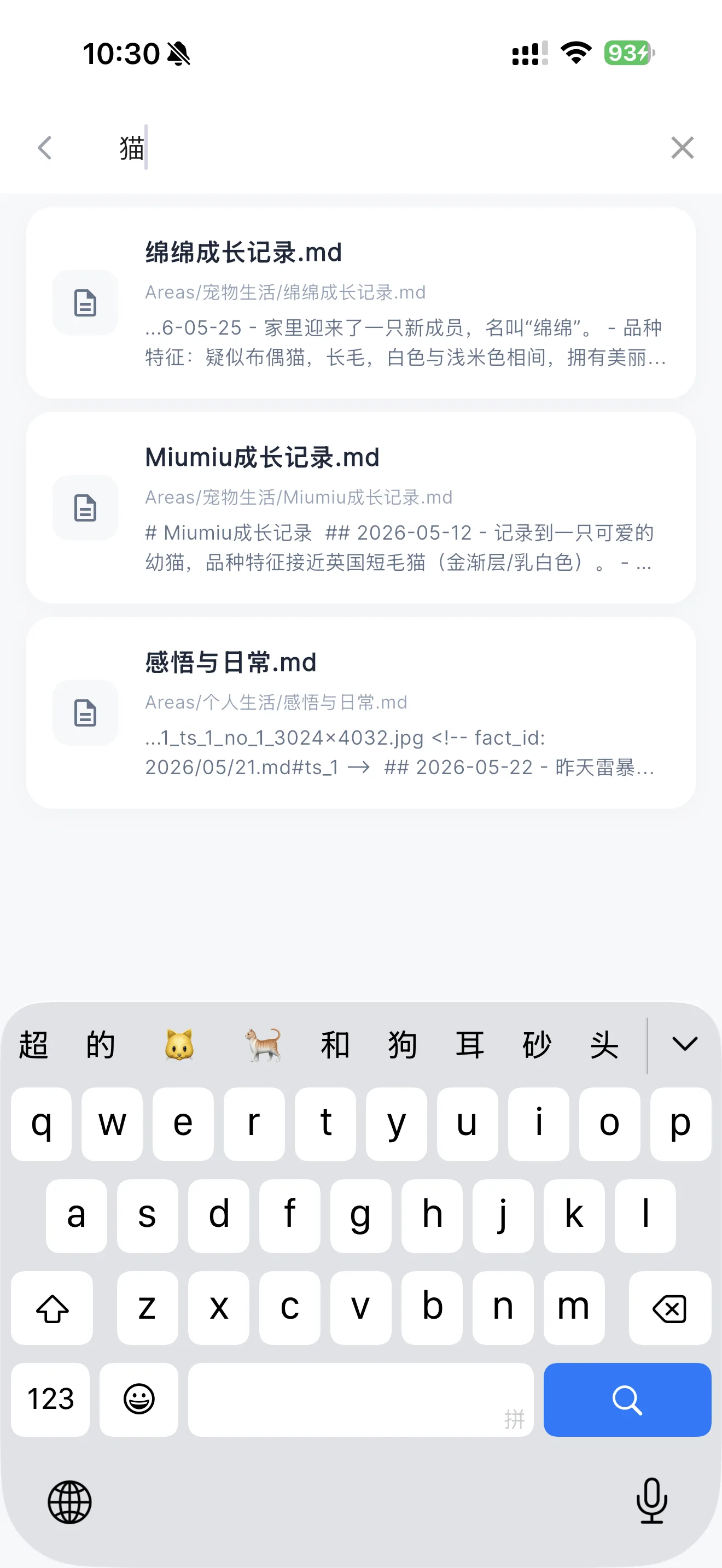
You do not need better discipline. You need better retrieval.
A lot of people think their problem is inconsistency.
They assume they need to journal more regularly, organize more strictly, or commit to a better note-taking habit.
Usually that is not the real issue.
Most people already capture more than enough. The real problem is that what they capture never becomes a form they can retrieve meaningfully later.
If your notes stay fragmented, your memory stays fragmented too.
You do not need a bigger archive.
You need a more searchable record of your life.
FAQ
What is a searchable life record?
A searchable life record is a system that lets you find, connect, and revisit your personal notes, photos, voice memos, and daily fragments across time. It preserves context, not just storage.
Why do fragmented notes become hard to use later?
Fragmented notes usually live across different apps and formats. Without structure, timestamps, and connections, they stay as isolated pieces instead of becoming a usable memory or knowledge system.
Is a timeline better than folders for personal knowledge management?
For many personal use cases, yes. A timeline matches how life is actually experienced. Folders can store information, but a timeline often makes it easier to understand what happened, when it happened, and what patterns emerged over time.
Can a personal knowledge management system work for everyday life, not just work notes?
Yes, but only if it accepts messy capture and helps organize it later. A practical PKM system for real life should work with text, photos, voice, tasks, and emotional context, not only polished reference notes.
How is Memex different from a normal note-taking app?
Memex is designed to turn fragmented daily capture into timeline cards, connected memory units, and searchable personal context. It focuses more on life organization and long-term reflection than on storing isolated notes.
Do not wait until your system is clean.
Do not wait until your habit is perfect.
Start with what is already there: the notes, photos, voice memos, and unfinished fragments you have been leaving behind all along.
If photos are the fragments you capture most often, the journal app with photos guide walks through the same idea as a user journey: turning ordinary daily pictures into a searchable life timeline.
That is not failed capture.
That is the beginning of a better personal knowledge management system, if your tools can turn it into a searchable life record.
If you are choosing the capture layer first, the AI note taking app guide explains why personal notes need a different workflow from meeting notes.
If you already capture your life in fragments, join the Memex Discord and tell us what your current workflow looks like. The most useful product feedback comes from real habits, not ideal ones.